Games
An arcade for streamers, a multiplayer shooter that doubles as a template, and a clumsy robot who cannot carry a box.
Games built for streams, not just for players
The games on this site share one idea: a game should be easy to play with a streamer. Instead of reading a room code out in chat and hoping nobody mistypes it, the arcade shows the streamer’s open room and lets viewers press JOIN. That idea became Nodal Play, a small arcade and room system. Its first owned multiplayer game is Nodal Strike, a five-versus-five shooter built on a reusable netcode template. A second game, Blunder Blender, is a physics prototype about a clumsy robot that is planned to grow into a chaotic multiplayer game.
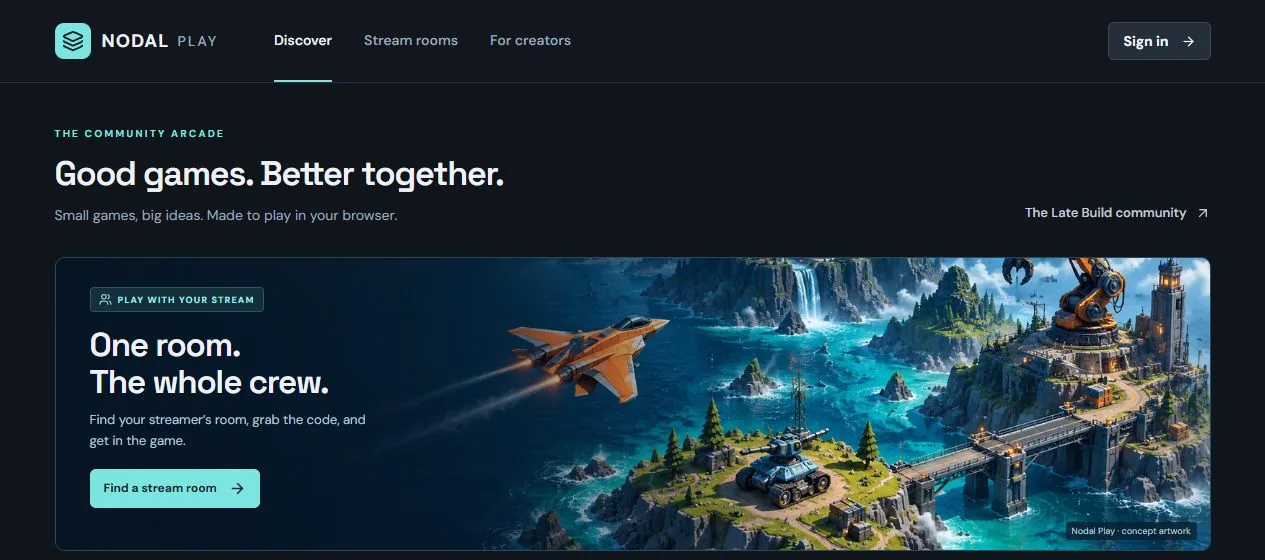
Nodal Play
The arcade and room system. Version 0.1, live now.
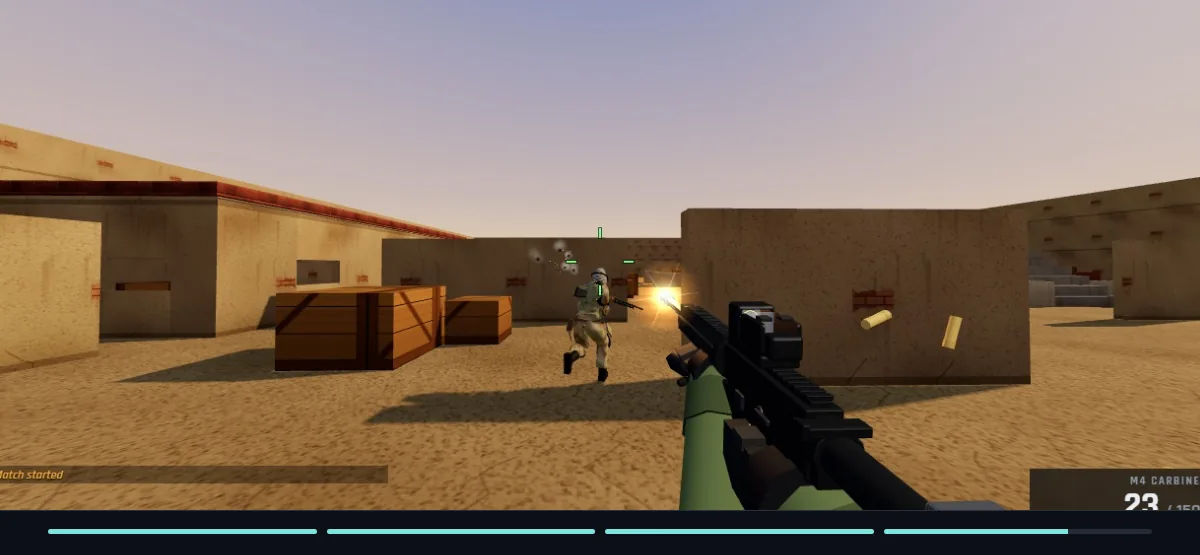
Nodal Strike
5v5 team deathmatch with server-authoritative netcode.
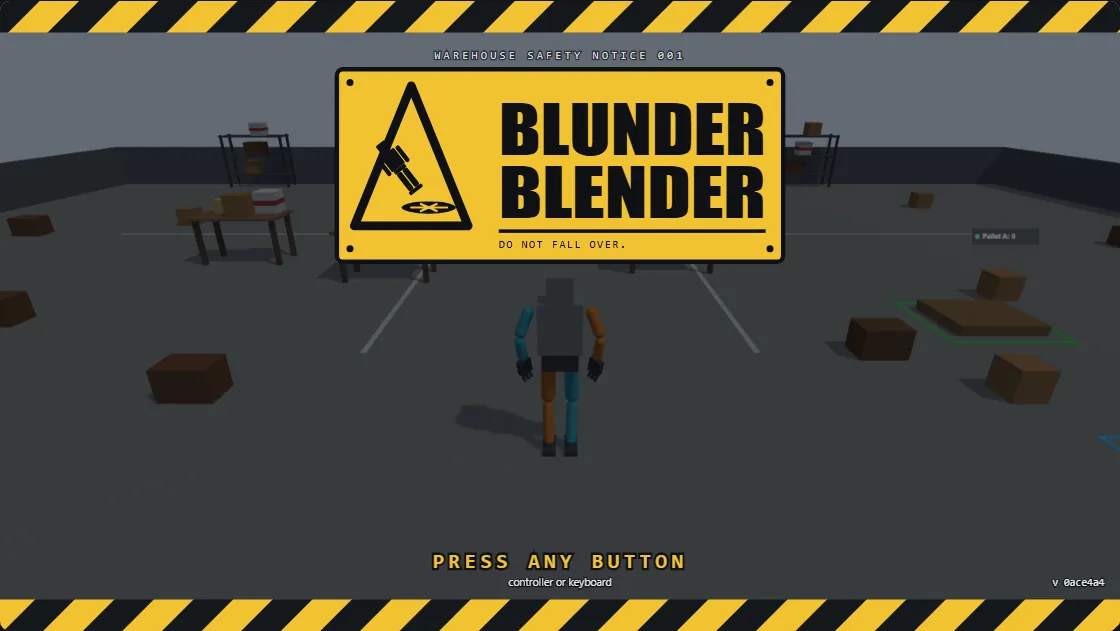
Blunder Blender
A robot physics prototype. Lots of work left.
Status at a glance
| Game or system | Type | Status | Players |
|---|---|---|---|
| Nodal Play | Arcade and room system | Version 0.1, live | Viewers join streamer rooms |
| Nodal Strike | Browser FPS and template | Playable online and offline vs bots | Up to 10 fighters, 5v5 |
| Blunder Blender | Physics robot game | Prototype, closed to the public for now | Single player today, multiplayer planned |
| Game of Life | Simulation (two versions) | Finished web apps | Single player |
| Theatre of War | Channel concept, not a game | Idea and planning only | None |
Nodal Play also lists a few independent games from other creators, linking out to each one’s own site; they keep their own accounts and servers. The catalog is deliberately small and says plainly which games support rooms and which are single-player links.
How the pieces fit
Think of three layers. The platform (Nodal Play) handles identity, rooms, votes and launching. The game (Nodal Strike, for now) runs on its own origin and handles the match. The template (the netcode and game packages behind Nodal Strike) is what a vibe coder starts from to build their own multiplayer game, such as battle royale, zombies or capture the flag. Because the games run on a separate origin from the platform, they never see account data, and the platform never trusts a game with a login token.
Why a separate platform at all?
Streamers who play games with their audience run into the same small frictions every time: codes read aloud, lobbies that fill with strangers, no way to vote on the next game. A platform that lists live rooms, gives viewers a one-click join and gives the streamer a vote-and-launch flow removes those. The cost is that every game needs a small integration (a room parameter and two messages), which is why the integration contract is short and documented on the Nodal Play page.
Why build the shooter first?
A multiplayer shooter is the hardest common game to get right online: movement must feel instant, hits must be fair and cheating must be hard. If the template can carry that, it can carry simpler games. Nodal Strike therefore doubles as proof and as a demonstration. Its netcode choices (60 Hz server simulation, client prediction, adaptive interpolation, lag-compensated hitscan and delta-compressed binary snapshots) are explained in plain language on the Nodal Strike page.
Play and watch
- Open Nodal Play to see the library and any open stream rooms.
- Open Nodal Strike directly to play offline against bots or create a room with a six-digit code.
- Watch games being built on the livestream, where the robot game and the shooter are developed and tested with chat.
- Report bugs in the Discord.
Questions people ask about the games
Do I need an account? Standalone Nodal Strike needs none. Nodal Play lets you sign in with Discord or play as a guest, and each game is marked with the access it needs. Can I host my own room? Yes: any signed-in player can get a short-lived host pass, and streamers can publish a room with an invite link. What about mobile? The games are browser games and are best on desktop with a keyboard and mouse or a controller; the arcade layout itself is tested down to phone width. Where do bugs go? The Discord has a bug-report channel, and the stream chat is the fastest way to reach the builder while games are being tested live.
Build your own
If you vibe code and want your game to work with a streamer audience, the shortest path is to start from the multiplayer template or to add the Nodal Play launch contract to an existing game. The contract is small: read two query parameters, validate them, map them to your lobby, and post two messages to the parent window if you are embedded. Details are on the Nodal Play page, and a related agent-friendly workflow is described in The vibe-coding workflow. Nodal itself, the workspace used to build these games with agents, is covered on the Nodal site.
The web projects that are not games in the strict sense, such as the two Game of Life simulators, appear in the Nodal Play library as single-player entries so that there is always something to open while waiting for a room to fill.